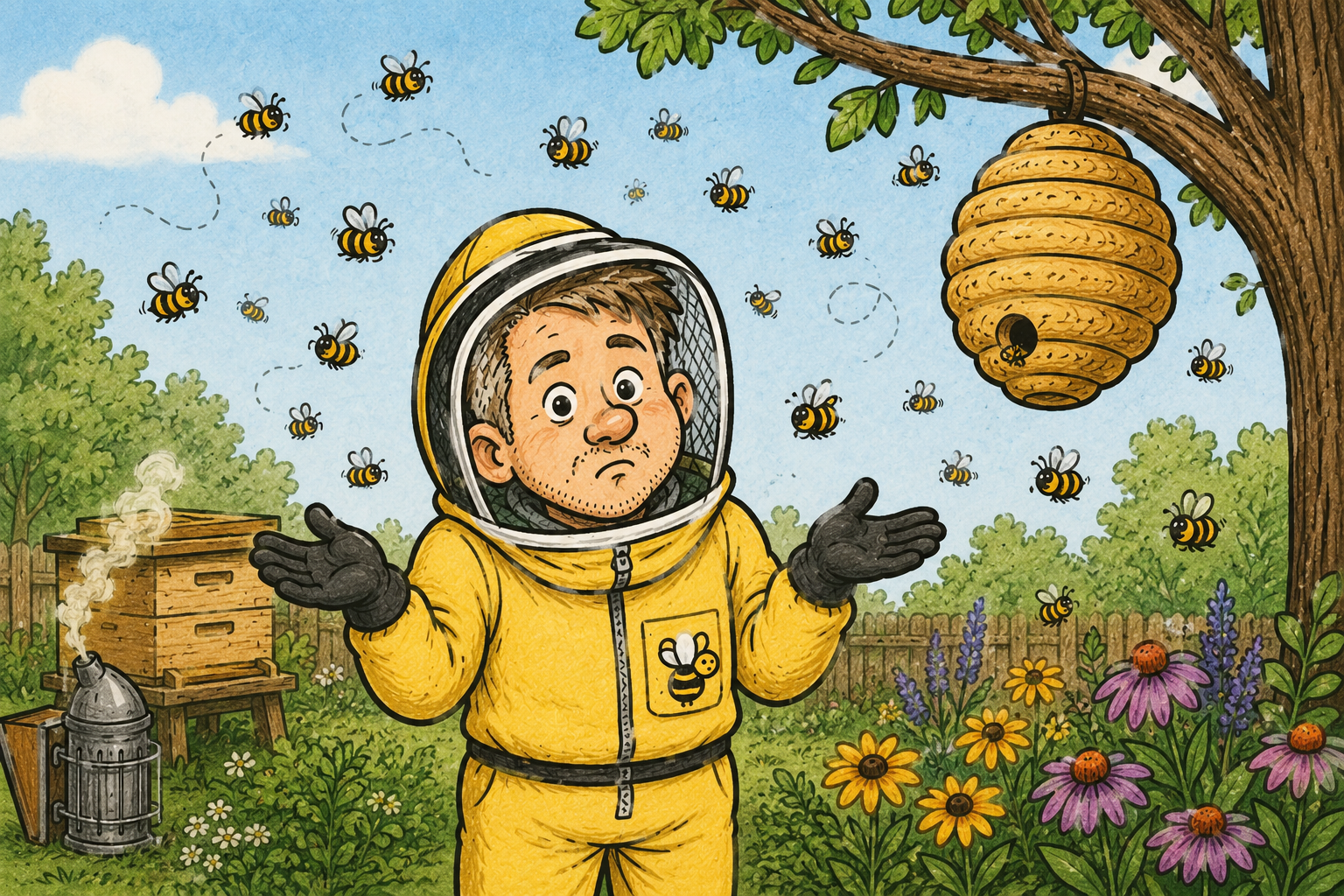
It all started in 2024 when I thought it might be interesting to have a honey bee hive. Admittedly, I don’t love honey that much, but then I don’t love most of the veggies I grow in the garden either. I just like nature and like to see what it does. Anyhow, in preparation for getting bees, I took a weekly beekeeping class at Asbury Woods, a local nature center, and then bought a hive, assembled it, and purchased a nuc from a regional seller.
That first summer was quite an experience with the bees. I didn’t really know what I was doing, the hive never really flourished, and in about September it was overtaken by hive beetles or some other pest that was totally disgusting.
The next year (2025), I wasn’t really sure if I was going to try bees again or not, but then later in the season (late spring, which is a bit behind for getting a colony going), I decided to give it another shot. I purchased a box of bees and a queen from the same regional seller. These bees were mean! Unlike the bees of the previous year, where I could pretty much take off the lid of the hive and inspect without a suit, these new bees would attack and sting with the slightest bit of disturbance. This hive did much better…for me anyhow. I mean, I still didn’t end up pulling a whole box of frames full of honey, but they stayed strong all season long and we did steal a little just to make sure we all got a taste of our very own honey in case the bees didn’t make it through winter.
Well, this hive made it through winter…maybe because they were mean, or maybe because I learned how to test and treat for varroa mites. By early May I was certain this was going to be the year I harvested frames and frames of honey. I had a medium honey super on top of the brood box, and bees were abundant within it on inspections.
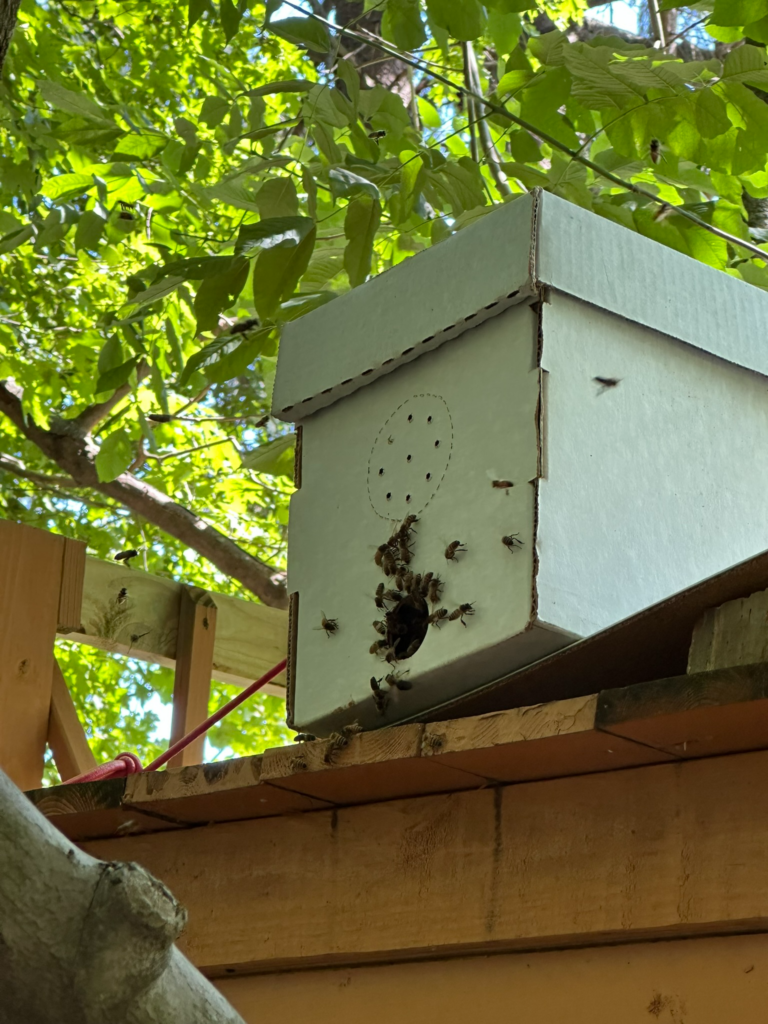
I was feeling good about my amateur beekeeping and thought I could even try to set a swarm trap and catch a swarm too. I took the old nuc box, put it on top of a clubhouse by the woods I had built for my children a few years back, and baited it with lemongrass oil in a cotton ball in a mostly sealed ziplock bag.
This was really going to be my year for honey bees…then something went wrong.
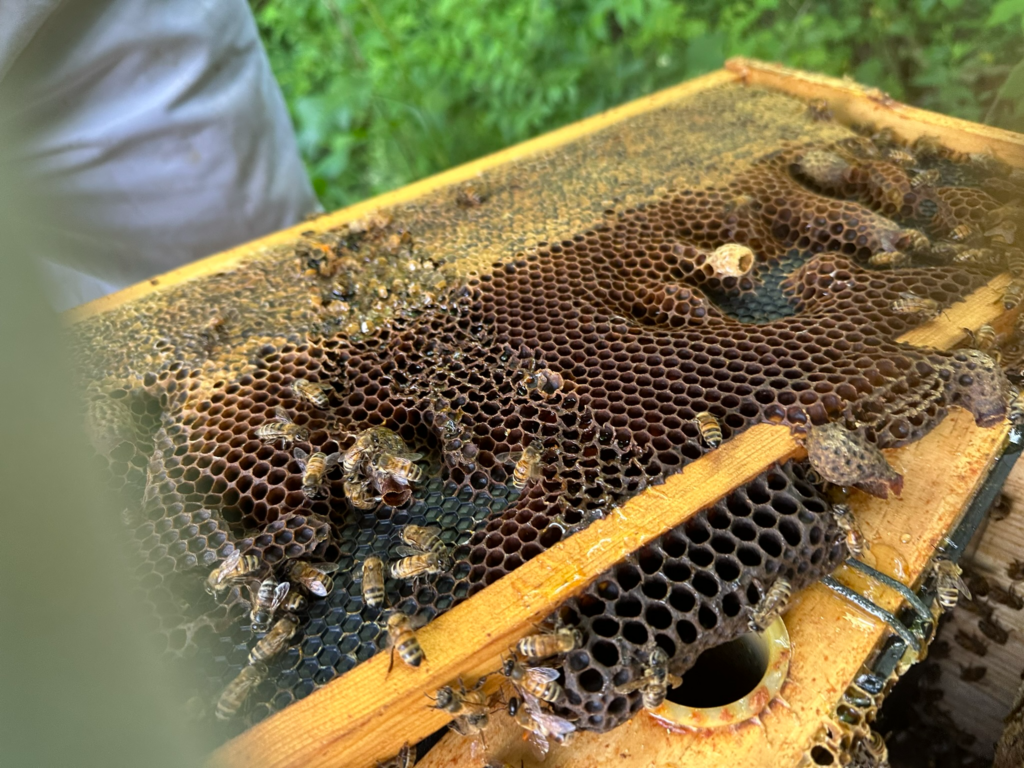
I was generally leaving the hive alone because it seemed strong, but then after a couple weeks in early May I decided to go inspect. I expected to see fresh comb and honey in the honey super, but instead what I found was a lower population of bees than the last time I had checked. Concerned, I opened the lower box and found many, many bees, but the comb patterns were weird and I wasn’t finding brood or a queen. What had gone wrong?! I didn’t think it could have been a swarm because they had all the extra space in the upper box, but I won’t pretend I really know why bees swarm. I started worrying that the queen had died or started failing. I consulted AI (which had become my unofficial beekeeping advisor by this point), and it was starting to seem like that’s what happened, either it swarmed or the queen failed. I gave the bees a few weeks to see if they’d raise a new queen. If this hive failed, that was it for me and my beekeeping ventures.
Over the next few weeks, I kept an eye on the hive. It continued to have traffic, but not a lot. When I inspected, I didn’t see brood in the middle frames, the comb was still sporadic, and the population seemed low. I did see what I thought might be queen cells that appeared to have holes in the bottom indicating maybe a new queen (or multiple emergency queens) had been raised, but still no brood.
Still, a few more weeks had gone by, and another inspection looked very much like the last one, with very little to be excited about. I had all but given up on the bees. I was literally packing up all my bee gear and throwing it in the shed to revisit the thought years from now when my wife started asking about why there were so many bees by the treehouse. Lo and behold, I had caught a swarm!
Now, I’m back in business!
I asked AI what to do (I’d been using it all along to help interpret inspections), and the plan that emerged was to move the swarm frames into the struggling hive.
I suited up to check the hive one more time for signs of growth. Showing little respect for those bees, I did not bother with trying to smoke them or anything. I tore the hive open, reacquainted myself with their classic angry attitude and started looking at frames. Now, maybe it was because they were stinging me through the suit, making me do a bit of a rush job, but I didn’t notice much of an improvement since the last inspection weeks ago. The numbers still seemed low, and the frames seemed a bit chaotic. I determined that the hive was deteriorating, most likely queenless, and this new swarm was just what I needed to fix things. I pulled the 2 frame feeder from the hive, loosened the frames so I could add the swarm frames later, and then walked away with about 1000 angry bees covering my suit.
I decided I would wait until dusk to add the swarm frames to the main hive. This would make sure most of the foragers/worker bees are in the nuc box so they could all come along for the move.
Dusk came along and it was time for the big move. This time, I brought smoke. Between the smoke and the time of the day, it was much easier to get a look at the hive without being stung a thousand times. I was really taking my time moving frames around to put the new swarm frames in the best possible location.
Enter the climax of the debacle:
I had two open slots from removing the feeder earlier in the day. One of the first things I did was spread out the existing frames and take two bee-covered frames from the swarm trap and put them into the hive. I merged the colonies. Then, I started shuffling frames around to get empty cells (not capped syrup/honey) next to the swarm frames so the new queen would find empty cells to start laying. As I was shuffling frames, I pulled out a frame near the outer wall and found brood that was not there just a week or so ago…so something is going on with a new queen in there! I had interpreted the signs over the last few weeks as queenlessness, but I was wrong, or at least too impatient, now I’ve got a mess. I’ve got a hive that was just beginning to recover with a new queen, and a swarm I just added to the mix with their own queen…what a mess.
In a bit of a panic, I pull the frames I had just added and put them back into the swarm box. I then add two older tall frames into the hive I’ve just completely disrupted and close it up. At this point, I’m regretting just not letting nature be nature. I had two hives, but my interference may have disrupted what I hope is a young queen’s recovery in the main hive. I may or may not have left the swarm queen in the main hive (thanks to the frame shakes), and the swarm may now be second guessing their choice for a new home!
All I can do is wait now. The lesson in all of this? Maybe I need to get better with a smoker, better at identifying a queen, and a little more patient. Or maybe I just need to remember that bees have been doing this a lot longer than I have.

Leave a Reply